Jupiter Ascending: 10 Years Later

“Time is the single most precious commodity in the universe”

If I could be a fly on the wall for the pitch meeting for Jupiter Ascending where multiple studio execs are hypnotized by a headshot of Channing Tatum and the idea of another “sci-fi blockbuster.” The sisters have got to be the most engaging and eloquent pitch-makers in the field as they take giant budgets and produce idiosyncratic mainstream films that baffle the studios fronting the bill. Over and over again, these films relatively to out-right “bomb,” get panned by the general public, and we start the news cycle all over again. Budget and profit hang wringing by news sites and “social media critics” has only grown in the ten years since this film, becoming the first signicator in overall film success. I imagine when this came out, people all over the internet were hypothesizing that the Wachowskis would never get a budget of this size again, which was probably said for Cloud Atlas… and Speed Racer. As we got to the 2020s, the “original story” aspect was the anchor most easily recognizable to major studios. It was not until Lana returned to their beloved franchise that she was able to do it all over again. If their point was not made clearly enough in all of their films, Matrix Resurrections is their most obvious critique on their battle of art and commerce, tackling Hollywood’s newest obsession – the legacy sequel. Again, let’s put the pieces together: huge budget, nobody liked it.

This is not meant to explain the unrepeatable careers of two of our great filmmakers, but to celebrate their most critically panned film. Jupiter Ascending is an earnest, interstellar adventure where you could be the most important character in the universe, as long as you want to. Jupiter Jones (Mila Kunis) works for her families house cleaning business, scrubbing toilets and fantasizing about a life of affluence. After witnessing the attempted abduction of her friend, she takes a picture of the aliens (referred to as keepers), but finds quickly that she has no memory of the event. Despite the event, and in need of money, she makes an appointment to sell her eggs, only for the keepers to shape shift from the doctors operating on her. It is only then that our hero, Caine Wise (played as a half-dog super soldier with flying boots by Channing Tatum) flies in to rescue Jupiter. Wise quickly explains that their world is not alone, and in the grand scheme of the “verse” (shortened for some reason in galactic slang), is just one of many pieces of an empire. Jupiter is just a regular woman, and yet, she is important and vital to her planet. A trio of siblings (Balem, Kalique, and Titus) rule over the House of Abrasax, one of the largest empires in the universe, which has just lost its matriarchal leader. When discovering that Jupiter is a genetic match for their late mother, they vie to bring her under their control as she is now the rightful heir to Earth.

It’s going to be hard (and unfair to the film) to detail out the entire plot of this film, but the main through line is the commodity of time and how it can be produced. As quoted at the top of this post, humanity has been stuck focusing on material resources on Earth, where those in this world have learned how to prolong life. When brought to Kalique’s planet, Jupiter discovers that one dip in a pool of clear liquid gel, and Kalique has erased her age. She is younger and rejuvenated, citing the pool for finding one’s “optimal physical condition.” It is only on Titus’ planet that she discovers the true origin of the pool, which is that the liquid is harvested from human lives.

Big suprise! The Wachowskis have returned to their idea of human beings as fuel. The planet of Earth has been secretly running as a farm for this intergalactic empire. As people die, they are being used to prolong the life of the galactic elite. The idea of humans as batteries originates in their Matrix series, but feels advanced (and predictive) to a world run by the elite instead of the machines. If The Matrix was about fighting for our humanity, Jupiter Ascending argues that we need to be reminded what our humanity is. The power and wealth of a few do not outweigh the rest, even when given the opportunity to join in the riches. The familial squabbles and insecurities of those in charge affect millions without a second thought. They are just two in the grand scheme, but isn’t it lovely that love can conquer all? The Wachowskis have always been earnest and sincere filmmakers, and that (apparently) is alienating to most audiences. Jupiter’s decision to keep Earth protected is not to control it, but to free it. The world goes on anyway, and she returns to her family, her job, and her new wolf-hybrid-boyfriend. The Wachowskis express that there are evils of the world (or “verse”), but that you can control your own life and destiny. While the battle between art and commerce feels over, art can still win.

Flashing forward, this movie made no real cultural imprint. With The Matrix officially codified as one of the pillars of film history, and their sequels and Speed Racer gaining large critical followings, Jupiter Ascending is still left in the void. This film is goofy, for lack of a better word, and far too convoluted. The plotting can be messy and overstuffed, but boy does it feel like it’s made my real people. All we tend to beg for are original blockbusters and yet, they continue to fail. It’s as if shooting for the middle time and time again has taken any voice out of what makes this medium special. Look at what this movie is about and tell me any piece of this that should be “relatable” to audiences. Do you know what should be a relatable takeaway for blockbuster entertainment? The protagonist of the film is given the opportunity for eternal youth, to be the wife of a powerful man, and to become the pseudo-matriarc of the most powerful family in the galaxy, and what does she do? Rejects them all to live her own life and create her own story.
Rating: 3.5 out of 5.

The Monkey: What’s the Balance of Being “In on the Joke”?

Dir. Osgood Perkins

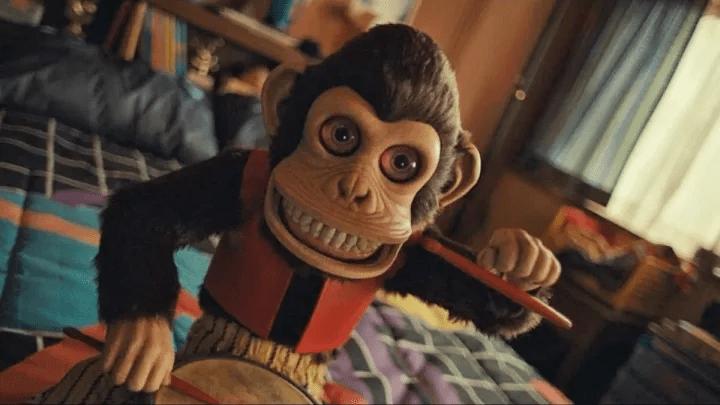
It’s March, and horror comedy is back on the menu. Osgood Perkins’ new feature The Monkey is fun in all the right ways and lacking in all the ones that matter as well. What thrives as a fun idea ultimately crumbles under the weight of actually having to be a movie. As negatively as that sounds, I found it be fun enough to enjoy myself. Perkins’ surreal version of the modern world keeps this from slowing down. The characters and situations are as outlandish as the log line for the film: what if a toy monkey could kill telepathically and can’t die.

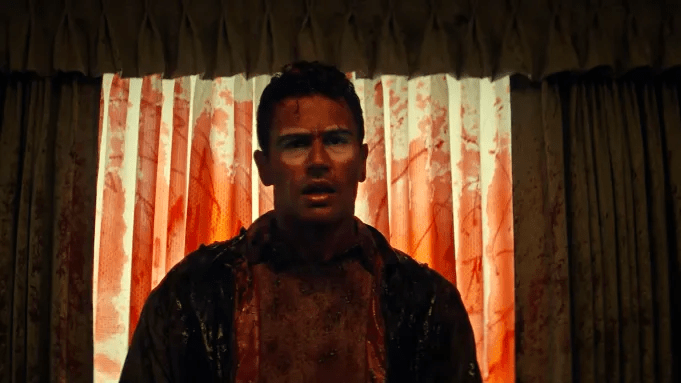
Hal, and his aggressive bully of a twin brother, live alone with their mother when they discover a toy monkey in their father’s old belongings. A twist of the key and somebody dies: simple enough? When Hal uses the monkey to get rid of his twin brother, he quickly learns that we cannot control our own demise. There is no control over who the monkey kills, just that it does. After living without the monkey for 25 years, it’s the small-minded actions of Billy (who Theo James has much more fun playing) that cause destruction. As people in their life begin to mysteriously die, Hal is warned by his twin brother that he is the final target. Hal knows what his twin brother knows: Billy can’t be killed as long as he is the one killing.

Throughout the film, the main through line is the element of control. Hal is bullied, orphaned, emasculated while his twin brother dominated his childhood. His wife has left him for a life guru/self-help book author who both treat him as a child. Hal has lost everyone and tries to keep it that way as he has kept his own son at arms length. Impending doom clouds around his mind at all times, just waiting for somebody near him to mysteriously die again. His relationship with his son, Petey, is his final connection to human relationships. They are estranged with Hal requesting to keep his visitations to once a year, and with the threat of his mother taking full custody over Petey, he remains unchanged by the thought of losing him all together. It takes Billy’s interest in his son, and his ensuing peril, for them to ultimately….. reconnect? Their relationship is yet another piece of the story that ultimately fizzles out.

Ultimately, what rolls as a farcical story of existential dread reveals to be more of a #random sequence of creative and outlandish deaths. Similarly to Perkins’ previous film (Longlegs), the ideas are there -and interesting- but they are used as tentpoles to prop up a director that seems to prefer to have fun with our characters trauma and experiment with styles. It can be the choice of the viewer to determine how hard they would like to try, which at times may feel as though you are trying harder than the film itself. However, you will have fun, as I did. Theo James is both odd and funny casting for an insecure loser allowing life to walk all over him, but he is having a lot of fun. Coming out the same month as Mickey 17, his twin roles are effective. The twin characters are over the top, but they do represent the balance of the self in the reflection of a childhood of extreme trauma: retreating from life or dedicating it to revenge.

Rating: 3 out of 5.

A Different Man: Best of 2024

Dir. Aaron Schimberg
“All unhappiness in life comes from not accepting what it is”

Tensely funny and overwhelming; a true plunge into insecurity and self-identity in the face of jealousy and vanity. The film begins with Edward (Sebastian Stan), who appears lonely and outcast. As an aspiring actor who is unable to get any real roles, he is financially supported using his facial deformity (known as neurofibromatosis) in HR-related resource videos about inclusiveness in the workplace. His entire identity has been structured around his physical appearance, as is his created mantra of “staying out of the way.”

After meeting a beautiful and accepting playwright named Ingrid (Renate Reinsve), who moves in across the hall, he begins to form a bond with a woman, in what seems like, the first time in his life. As she begins to accept him, his insecurities and anxieties push back, and his stunting of the relationship leads to complete spiraling. This leads to the discovery of a groundbreaking facial procedure that would allow Edward to change his appearance. By the end of the shockingly visceral science-fiction/body horror sequence of transformation, Edward tries nothing more than to hide his shame and secret, never attempting to self-actualize as he intended. Instead, he is influenced by an immediate acceptance of surprisingly elated Mets bros and a dream-like sexual encounter in a bathroom stall to enjoy his new life. He hides his real identity, completely changes his personality, and lies to everyone to move on.

An unspecified amount of time later, Guy is a real estate mogul of some kind with an upgraded apartment and social life. The mask of his former face, which was given to him by his doctors following the procedure, is seen hidden, but peering out, above his bed. It isn’t until rediscovering Ingrid, and her follow-through in a way on the promise to “right him apart, apart his façade begins to unravel. He becomes desperate to return to his previous life (as both Edward and as an actor) and reconnect with Ingrid. He begins working in the theater, sleeping with Ingrid, finally feeling able to live behind the mask. After integrating back into this community, multiple characters discuss the ethical nature of performance with prosthetics, a true actor with the same condition as the character of Edward, appears in the film out of thin air right as Guy’s new dream life has begun. Oswald, mirroring almost as Edward’s Tyler Durden, is devilishly charismatic and immediately accepted and respected by everyone in Guy’s life. Guy’s lifeless stare as he (relatively quickly) watches the man he always wanted to take the life he briefly had is both heartbreaking and hilarious. Piece by piece, Oswald chips away at Guy’s life by integrating himself into their theatrical production, and soon, his relationship with Ingrid. His simmering anger and jealousy are played to no audience until the pot boils over. He is equally as isolated as before his procedure. Edward was never ignored, if not ogled, and this film correctly flips an empathetic man seeking escape to a structure of vanity collapsing in on itself.

Self-acceptance is the only path forward to self-identity. “Let’s be honest with ourselves,” Oswald relays to a spiraling Guy as his part in the play, and his life, are being taken away from him. Is his life objectively better looking like Sebastian Stan? Sure, but the character of Guy is lost, desperate, and self-destructive. It’s the ultimate punchline of this hall of mirrors. We don’t get to rehearse our insecurities in a play written about ourselves (or get to be interviewed by famous actors on how to play them in a phenomenal final cameo). When you get off the stage, you need to remember that you are still you. As said in the film, the play isn’t about Oswald, it’s about Edward.

Rating: 4.5 out of 5.